
Quick Answer
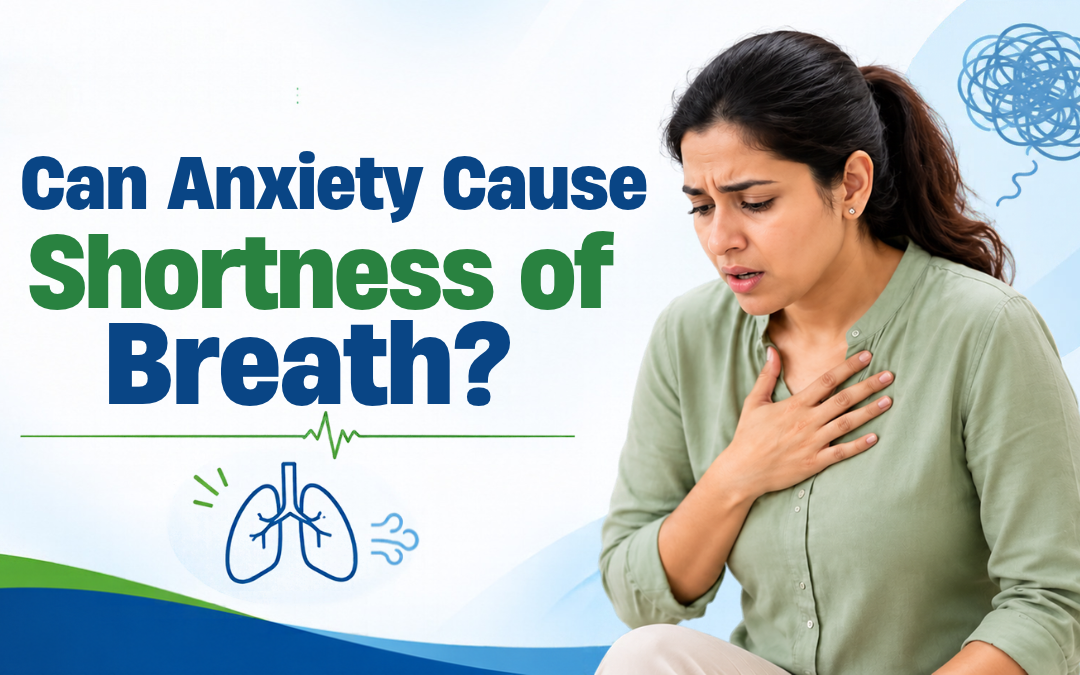
Yes. Anxiety and panic attacks can cause shortness of breath, rapid breathing, chest tightness, and a feeling of not getting enough air. However, breathing difficulty can also be caused by lung or heart conditions, so persistent or unexplained symptoms should not automatically be attributed to anxiety.
How Can Anxiety Affect Breathing?
When you feel anxious, your body's stress response can change your breathing pattern. You may start breathing faster or more shallowly, which can create a sensation of breathlessness.
What Can Anxiety-Related Breathlessness Feel Like?
You may experience:
- Feeling unable to take a deep breath
- Rapid breathing
- Chest tightness
- Racing heartbeat
- Dizziness
- Tingling
- Fear or panic
How Can You Tell If It Needs Medical Evaluation?
You should consult a doctor if:
- Breathlessness is new
- It keeps happening
- It occurs during exercise
- It wakes you from sleep
- You have wheezing or persistent cough
- You have chest pain
Sudden severe breathing difficulty requires immediate medical attention.
FAQs
Can anxiety cause breathing problems even when oxygen is normal?
Yes. Anxiety can cause a sensation of breathlessness even when oxygen saturation is normal.
How can I calm anxiety-related breathing difficulty?
Slow, controlled breathing and relaxation techniques may help, but recurring symptoms should be medically evaluated.
Can lung disease and anxiety occur together?
Yes. Living with breathing difficulties can also increase anxiety, so both conditions may need attention.
Conclusion
Anxiety can cause genuine breathing discomfort, but it is important not to assume that every episode of breathlessness is anxiety. Proper evaluation can rule out lung and heart conditions and help you receive appropriate treatment.